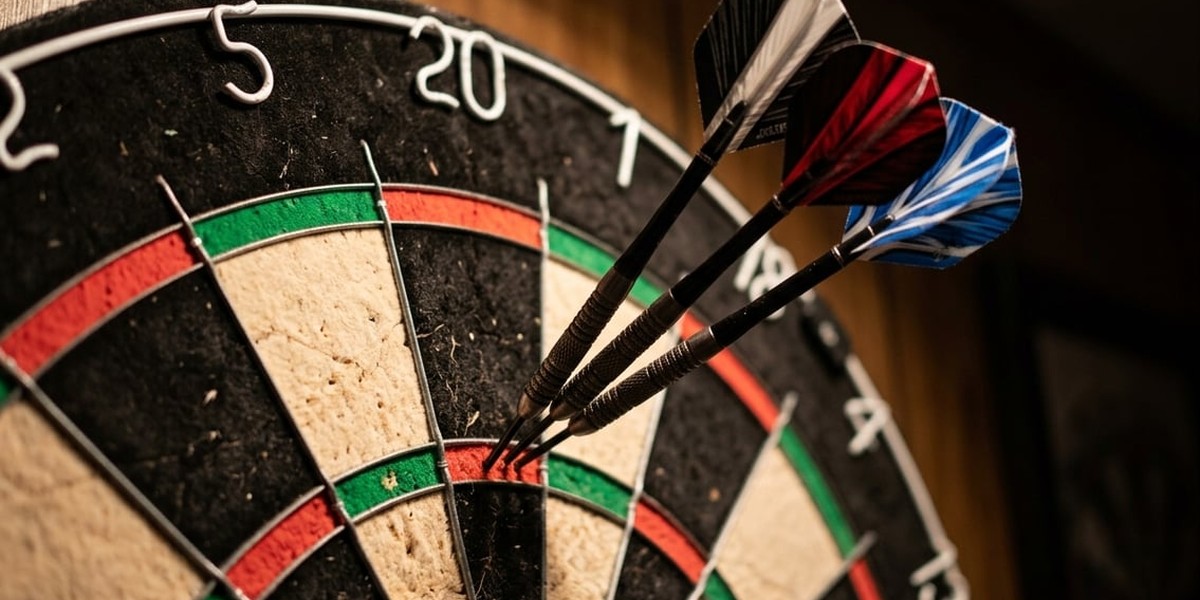
In darts, the scoring wins the attention. The finishing wins the match.
Darts has become one of the great betting sports. The matches are short, the scoring is simple to follow and there are markets on almost every throw. It also rewards knowledge more than most sports, because averages, checkout percentages and head-to-head records tell you a lot about how a match is likely to go. This guide covers the bookmakers that treat darts properly and the markets worth understanding. For our full ratings across every sport, see the main guide to the best betting sites.
The best darts bookmakers
| Bookmaker | Why for darts | Worth knowing |
|---|---|---|
| BetVictor | Often the sharpest fixed-odds darts prices | App is plainer than the big brands |
| bet365 | Widest market range and live streams | Prices competitive but not always best |
| Betfair Exchange | Best prices on big televised matches | Thin liquidity on minor events |
| William Hill | Deep outright markets on major tournaments | Fewer in-play specials than bet365 |
Darts is also a sport where the betting sites and the fans overlap more than most. Many regular darts bettors follow the sport closely through the week, watching floor events on streams and tracking averages. That knowledge is exactly what gives them an edge over bookmakers who treat darts as an afterthought.
The darts calendar
Professional darts is dominated by the Professional Darts Corporation. The season builds to the PDC World Championship, held at Alexandra Palace in London from mid-December into early January. Around it sit the Premier League, which runs on Thursday nights through the spring, the World Matchplay in Blackpool in July, the World Grand Prix, the Grand Slam of Darts and the Players Championship Finals, along with dozens of smaller Players Championship and European Tour events.
For betting, the televised events matter most. They attract the most money, the widest range of markets and the tightest prices. The smaller floor events are still covered by the big bookmakers, but markets are limited and prices can be less reliable.
Premier League nights
The Premier League is a regular fixture on Thursday nights through the spring, with each night played as a knockout between eight players. It gives bettors a weekly schedule of high-profile matches, with bookmakers offering match bets, nightly winner markets and outright prices on the overall winner of the league.
Darts markets explained
Match winner
The simplest bet: which player will win the match. Most darts formats cannot end in a draw, so this is usually a simple two-way market.
Correct score
You predict the exact score in legs or sets, such as 6-4 in a best-of-eleven legs match. It pays well because it is hard to get right, and it rewards a clear view of how close the match will be.
Handicaps
A handicap gives one player a head start of a certain number of legs or sets. It makes one-sided matches more interesting, because the favourite must win by a margin to beat the handicap.
Most 180s
One of the most popular darts markets. You bet on which player will throw more maximum scores of 180 in the match, or on the total number of 180s being over or under a set figure. Heavy scorers who average highly tend to throw more maximums, but the number also depends on the length of the match.
Highest checkout
You bet on which player will record the highest finish, or whether there will be a checkout above a certain score, such as 100 or 170. Checkouts are more random than 180s, which makes this market harder to predict but sometimes more generously priced.
From the rule book
If a player withdraws before a match starts, match bets are usually void and stakes returned. If they retire during a match, rules vary between bookmakers, so check the darts section of the terms.
Leg and set betting
Some formats are played in legs, others in sets made up of legs. The World Championship uses sets, which lengthens matches and tends to favour the stronger player. Most other events use legs. Knowing the format helps you judge whether an upset is realistic, and which handicap line makes sense.
Specials and props
Bookmakers also offer specials, such as whether a nine-dart finish will be thrown during a tournament, or which player will record the highest average. These are fun but carry larger margins than standard markets, so keep stakes small.
The numbers that matter
Darts is unusually well served by statistics. Three figures matter most. The three-dart average shows how heavily a player scores. The checkout percentage shows how reliably they finish legs. And the head-to-head record shows how two players have fared against each other.
A high average does not guarantee a win if the checkout percentage is poor, and a player who struggles against a particular opponent may do so again. Match formats matter too: short formats, such as best-of-eleven legs, give weaker players a better chance of an upset than long set-play matches at the World Championship.
Form over time
Averages vary from match to match, so it is worth looking at a player's form over several recent events rather than a single result. A player whose averages have been climbing over a month may be a better bet than one who recorded a single high average last week.
In-play darts betting
Darts suits in-play betting well because each leg is short and the momentum can shift quickly. Bookmakers offer live markets on the next leg winner, the next set, the number of darts to finish a leg and the total 180s remaining. The best platforms update prices after every visit to the oche.
The pace also makes it easy to bet more than you meant to. A match can have dozens of legs, and each one is a fresh betting opportunity. Set a limit for the match before it starts.
Watching the throw order
In darts, the player who throws first in a leg has an advantage, because they can win the leg before their opponent gets the same number of darts. In-play leg markets reflect this, and prices on the next leg shift depending on who is throwing first. It is a small detail that experienced darts bettors always keep in mind.
Outright betting on tournaments
Tournament outright markets are where darts bettors often find value. The World Championship field is large, the draw can open up for players in the easier half, and a single bad session can knock out a favourite. Several bookmakers offer each-way terms on darts outrights, paying if your player reaches the final or, on some events, the semi-finals.
Check the each-way terms carefully. Some bookmakers pay a half of the odds for reaching the final, others a quarter for the semi-finals. The best terms change from event to event, so it pays to compare.
Outright markets also move during a tournament, so a player you fancied before the start may be available at a better price after an early scare.
Watching darts on betting sites
The major televised darts events are broadcast on television and streaming services, and most are not streamed by bookmakers. Coverage by bookmakers is more common for European Tour and smaller events, where they can hold the rights. A funded account or a bet on the match is usually needed to watch.
Where no stream is available, a live scoreboard showing averages, checkout percentages and 180s is invaluable for in-play betting.
Streaming is also useful for judging form. Watching a player's rhythm, how they recover after a missed double and how they handle pressure legs can tell you more than the statistics alone.
Why prices vary so much in darts
Darts is still a minor sport for many bookmakers, so their traders may know less about it than they do about football. That creates wider differences in prices between bookmakers than you will see in most sports. A specialist such as BetVictor may price a match very differently from a generalist, and the exchange may differ from both.
For darts fans, this is an opportunity. Having two or three accounts and comparing prices before every bet can make a real difference to your returns over a season.
Betting on the World Championship
The World Championship is the biggest darts betting event of the year. The field is large, matches in the early rounds are short, and the tournament spans the Christmas period, when many people have more time to watch. Bookmakers compete hard for business, with price boosts, enhanced each-way terms and money-back specials on the favourites.
The early rounds can produce surprising results because of the short format, while the later rounds tend to favour the more consistent players as matches get longer. Many bettors place their outright bets before the draw is known, but waiting until the draw is published lets you see which half of the bracket each player is in, which can make a real difference to their chances.
As with any festive event, it is easy to bet more than usual when you are watching every night. Setting a budget for the whole tournament before it starts is the simplest way to enjoy it without regret.
Keeping darts betting enjoyable
With televised darts on several nights a week during the busy parts of the season, it is easy for betting to become a habit rather than a choice. Pick the events you genuinely want to follow, set a weekly deposit limit and keep your stakes level. If a run of losses starts to bother you, take a break. Every licensed bookmaker offers time-outs and deposit limits in the account settings.
Questions and answers
Which bookmaker is best for darts betting?
BetVictor often has the sharpest fixed-odds darts prices, bet365 has the widest range of markets and streams, and the Betfair Exchange is strong on big televised matches.
What is a most 180s bet?
You bet on which player will throw more maximum scores of 180 in a match, or on whether the total number of 180s will be over or under a set figure.
When is the PDC World Darts Championship?
It is held at Alexandra Palace in London from mid-December into early January each year.
What happens to my bet if a darts player withdraws?
If a player withdraws before the match, match bets are usually void. If they retire during a match, rules vary between bookmakers, so check the terms.

Fiona Galbraith
Sports editor
Fiona covered football, golf, darts and snooker as a sports features writer in Glasgow for sixteen years, from the Old Firm to the Crucible. She has bet on all of them, usually for small stakes, and reviews bookmakers on how well they cover the whole sporting calendar.